
Sep 15, 2026Success Stories / Case Studies
Why Physical Shade Samples Matter in Private Label Lip Liner Development
A real lip liner development case shows why physical shade references, undertone comparison and sample feedback matter more than photos when matching custom colors.
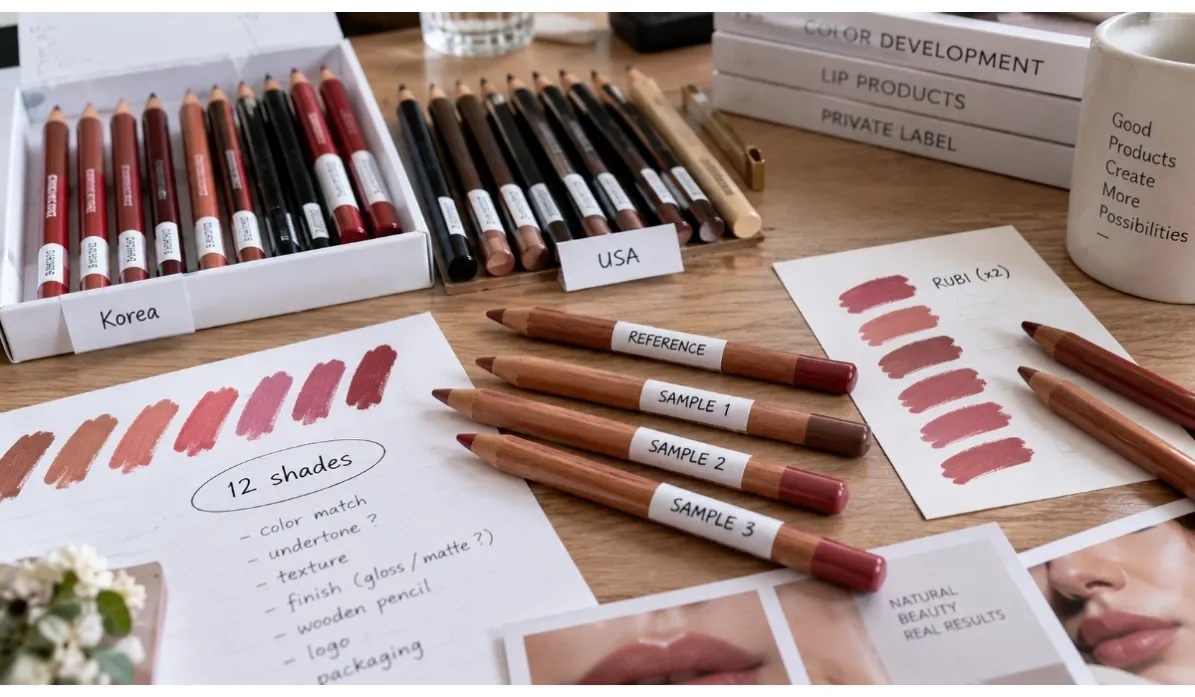
A recent private label lip liner project reminded me how difficult color development can become when everyone is looking at the same shade through a different screen.
The buyer was developing a wooden lip liner collection.
We had already produced samples earlier in the project, but after some team changes on the buyer’s side, the shade direction needed to be reconfirmed.
Instead of continuing to compare colors through photos and email attachments, the buyer sent us the actual lip liner references they wanted us to work from.
That changed the conversation immediately.
A photo can show the color — but not always the real shade
When buyers send a shade photo, it is useful for understanding the general direction.
But it is difficult to use a screen image as the final matching standard.
The same brown shade can appear:
warmer on one phone,
more red under indoor lighting,
darker in a product photo,
or more neutral on another monitor.
For color cosmetics, those differences matter.
A buyer may describe two shades as “brown,” while one actually has a red undertone and the other leans cooler or more mauve.
That is why a physical shade reference gives the development team much more reliable information.
In this project, the references came from different manufacturers
The buyer sent two groups of existing lip liner samples for matching and leaving 12 unique colors to evaluate.
That detail sounds small, but it matters when preparing a shade-development plan.
Before starting another round of samples, we needed to make sure both teams were talking about the same number of actual shades.
This is one reason I prefer confirming the physical references before moving directly into laboratory color matching.
Shade matching is more than “copy this brown”
Once the physical pencils arrive, the comparison becomes much more specific.
The team can look at:
- undertone
- color depth
- red / brown / mauve balance
- payoff
- finish
- texture during application
A shade may look similar in the pencil barrel but swatch differently on skin.
For a wooden lip liner, application feel also matters.
Color accuracy is only part of the customer experience.
The outside of the pencil also needs approval
This particular project was not only about the shade.
We also had to reconfirm the appearance of the wooden pencil itself.
Our previous sample used a gloss coating on the pencil surface.
Before making the next round, we asked the buyer whether they wanted to:
keep the existing glossy finish
or
make changes to the surface treatment.
It is a good reminder that a lip liner sample should not be approved only by looking at the color.
The final product is:
Shade + Texture + Pencil Finish + Branding + Packaging
All of those details eventually become part of the retail experience.
Physical references reduce guesswork
For beauty brands developing custom lip colors, I would not recommend relying only on:
screenshots, Pantone-style visual guesses or product photos.
If an existing lipstick or lip liner already represents the exact direction you want, sending the physical product can make the development process much clearer.
The manufacturer can then work through:
Physical reference → first sample → swatch comparison → buyer feedback → adjustment → final approval
The goal is not to make the development process complicated.
It is to remove as much subjective guessing as possible before bulk production.
For this project, the next step is not simply “make 12 colors.”
It is making sure we have correctly understood which 12 colors, how they should perform, and how the finished wooden lip liner should look.
That is the kind of detail worth confirming before scaling a color cosmetics project.
At BegoBeauty, we support private label skincare and color cosmetics development, including wooden lip liners, custom shades, sampling, surface finishing and packaging.
For brands that already have target shades, a physical reference sample is usually the most useful place to start.